
History
In Indian lore the Thunderbird was a great and invincible power,half hawk, half eagle, that ruled the skies.
Thunder rolled from its wings and lightning flashed from its eyes to ward off danger.
In 2002 the Thunderbirds celebrated the 40th anniversary of their founding. It is remarkable that this one group could remain together through so long a cycle in the development of a hobby. That they could accomplish what they have done individually and collectively is even more remarkable. Its founders have matured and are passing their torches to younger blood. Memories fade with maturity. Some of those memories are captured here.
Club Formation
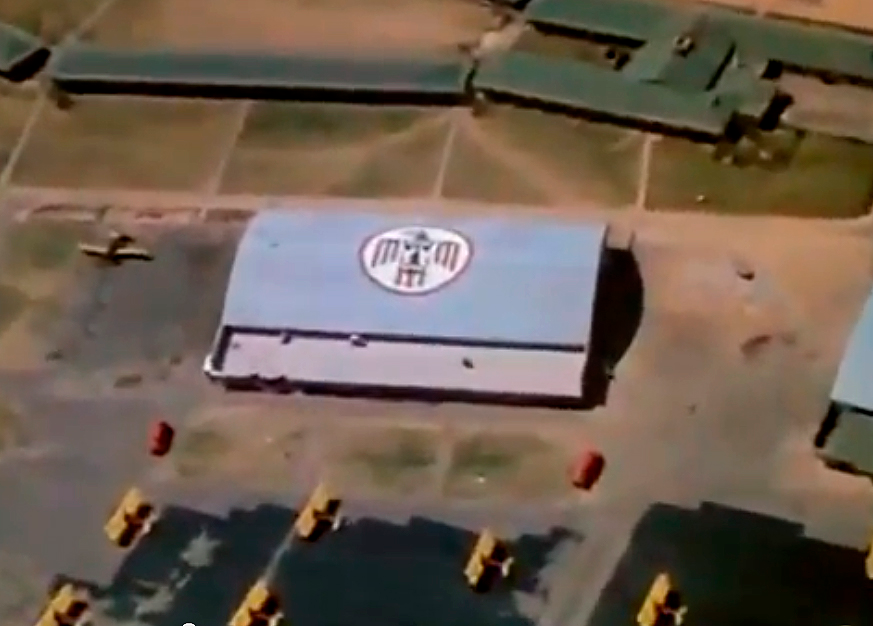
Early RC flying took place on US Army Corps of Engineers land north of Benbrook Lake. Mowing the high grass provided a crude runway. As the city of Benbrook housing crept closer to the lake, the group moved west, then south, but so did the City of Benbrook. Eventually Mr. Morris, from the Corps, suggested that the group move to the West side of the lake where they found a location that is the home of today’s Fort Worth Thunderbirds. Once a long-term field was available, the group of flyers, most of them being members of the AMA, decided in September 1962 that an AMA sanctioned club should be formed. The club was named after the U.S. Air Force Thunderbirds aerial demonstration team which had been formed at Luke AFB near Phoenix just 5 years earlier. Like the USAF Thunderbirds, the Fort Worth Thunderbirds adopted the Indian Thunderbird symbol. Members drew up the first constitution and by-laws, elected officers, made plans for a field, and applied for AMA sanction. The application was approved and they were assigned AMA Charter Number 1217.
Flying Field
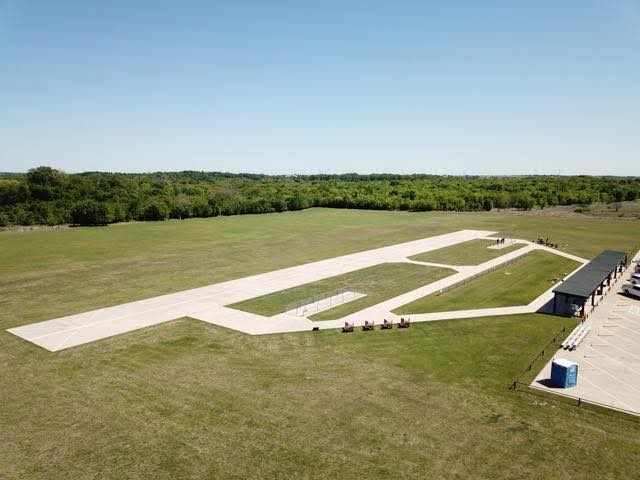
Benbrook Lake has always been the home of the Thunderbirds. Cooperation with the Corps resulted in the club being able to lease and maintain its present site for nearly 40 years. This partnership paved the way for other clubs around the country to fly from government land. The Thunderbirds have never forgotten the Corps of Engineers’ support in those early years and continue to respect and solicit their counsel with each new field project. As a result, the field has been improved with time and is now one of the premier flying sites in the country. The first runway, an asphalt diamond, was constructed by club members in 1965. A concrete runway was added in 1992 and it was extended in 1998. Today Thunderbird field is a facility with unlimited flying to the North, East and South, a 480 X 40 foot concrete runway, a paved and sheltered pit area 100 (soon to be 160) feet long, runway quality grass all around and paved parking for more than 100 cars. A small group of dedicated members grooms the field weekly. They plant, fertilize, mow, edge and water. The club has also developed a close relationship with the City of Benbrook.
Club Achievements
Since being chartered, the club and its members have achieved notoriety in the RC world. Some of those, as recalled by some of the members, follow.
- First to work with the Corps of Engineers to get a flying field.
- First National Fun Fly championships (required 2 fields).
- First Jumbo Fun Fly (rules used by IMAA today).
- Started Quarter Midget pylon races, wrote the rules.
- First Lone Star Aerobatic Convention (Drew 10000 spectators).
- Non-stop cross-country flights (to Oklahoma City in the ‘60s, to Waco in the 70s).
Individuals of Note
- Chuck Cunningham helped Don Dewey start RC Modeler magazine. He was a regular contributing editor until his health caused him to slow down a couple of years ago. A standout among Chuck’s designs is the Lazy Ace family of biplanes, many of which have been built from plans and kits. (At one time, three Thunderbirds were writing RCM columns.)
- Ed Rankin was a designer of airplanes at General Dynamics. He used his skills at home to design many RC airplanes from quarter midget racers in the sixties to unlimited racers such as the winning Shoestrings and Caudrons of the nineties.
- Johnny Casburn manufactured kits in Fort Worth. He started with U Control models in the ‘40s, but will be remembered most for his excellent Lucky Fly RC kits.
- Charlie Powell designed a biplane that his son Jeff flew to second place in Expert Pattern at the ’91 AMA Nationals. This may have been only biplane ever to place in this event. Charlie also won the Formula I 6.0 pylon racing championship in ’97. (Three generations of RC flying Powells (Charlie, Jeff and Spencer) were featured on the August 2001 cover of Model Aviation.
- Roger Cirelli was the Thompson Trophy champion in ’97 and ’98.
- Jerry Bradley was Thompson Trophy champion in ’99 and 2000.
- Ernie Harwood designs and builds highly detailed scale models of World War One Fighters. He always places high at the AMA Nationals and has participated in Top Gun.
- Lee Rice is another scale modeler who has placed high in Top Gun, a national invitation-only event.
- Roy Klett is a master toolmaker and a major supplier of RC hobby accessories.
- Keith Sparks has had several of his designs published in national magazines.